
We Put a Stop to Chimney Leaks
Here in North Central Ohio, we’re lucky enough to experience the full range of seasons. This means we get a fair amount of rain dispersed throughout any given year, as well as snow, ice, and sludge during the winter months.
Unfortunately, this moisture can really take a toll on your chimney system, causing extensive damage and making its way into your home. If you’ve noticed water damage surrounding your chimney system or you think you may have a chimney leak, call Chim-Cheroo Chimney Services right away. Neglected leaks not only jeopardize your chimney and fireplace system, but the surrounding areas of your home, too.
We See What Others Miss With Infrared Thermal Imaging Technology
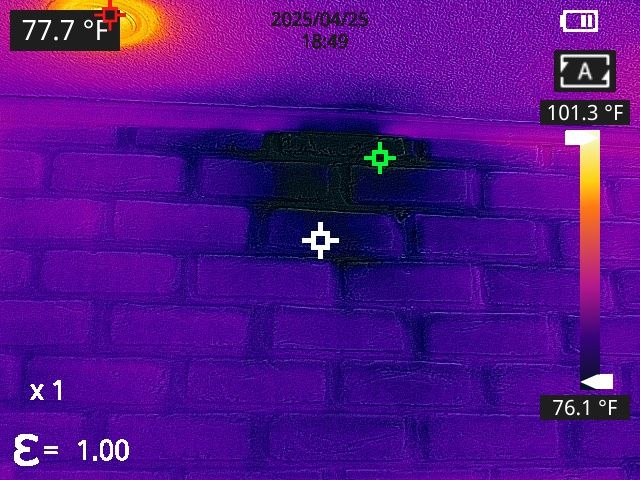
At Chim Cheroo Chimney Service, we’ve invested in the latest diagnostic technology so you get answers, not guesswork.
Our Infrared Thermal Imaging Camera allows us to detect hidden problems inside your chimney system quickly and accurately – without tearing into your walls or ceilings. Here’s what that means for you:
- Find Hidden Problems Without Opening Walls: Our camera detects temperature differences behind surfaces, revealing issues that a standard visual inspection simply can’t catch.
- Catch Moisture Before It Causes Major Damage: Water infiltration is one of the leading causes of chimney damage. Thermal imaging lets us spot moisture intrusion early before it leads to mold, structural damage, or expensive repairs.
- See the Visual Proof of What Was Found Yourself: We show you exactly what we found. Our thermal images give you clear, visual documentation of any issues, so you can make informed decisions with confidence.
Why Is My Chimney Leaking?
The first step in fixing a leaky chimney is to determine the initial point of entry. Chimney leaks can start in a number of places, but two of the most common areas are the flashing and the masonry itself.
- Flashing: The area where your chimney intersects your roof is incredibly vulnerable to water penetration, which is why it should be sealed with sheets of metal flashing. When properly installed and maintained, these metal sheets will protect this juncture with a watertight seal and divert any water away from the joints. Unfortunately, flashing can fail, especially if it’s improperly installed or has begun to deteriorate as a result of strong winds or animal interference.
- Masonry: Another common source of chimney leaks is the masonry of the chimney itself. Moisture can wreak havoc on brickwork – especially if it hasn’t been professionally waterproofed. While brick is durable and strong, it is also very porous, meaning that once water permeates the material, it will only worsen as time goes on. The result is crumbling, cracking, and flaking bricks and mortar joints and a system susceptible to even more damage.
While these are two of the most common issues we find, that doesn’t mean they’re the reason your chimney is leaking. You could also have a damaged chimney crown, a missing chimney cap, or something else. No worries, though – whatever the issue, we’ll get to the bottom of it.
And once things are resolved? Be sure to book professional waterproofing services to keep your system looking good and standing strong for years to come.
How Do I Know if My Chimney Is Leaking? What Are the Signs?
Chimney leaks are sneaky. Water that enters at the top of the chimney can travel down through the structure and show up in unexpected places – sometimes far from the chimney itself. By the time a leak becomes visually obvious inside the home, it has often been developing for quite some time. Knowing what to look for helps you catch the problem earlier, before the damage compounds.
Signs visible near the fireplace or chimney interior:
- Water or moisture inside the firebox after rain
- Rust staining on the damper, firebox walls, or fireplace accessories
- A deteriorating, warped, or stuck damper — chronic moisture exposure corrodes damper components
- White mineral staining (efflorescence) on interior brick surfaces
- A persistent musty or damp odor coming from the fireplace, especially during warm or humid weather
- Visible staining or discoloration on the back wall of the firebox
- Water stains on ceilings or walls adjacent to or directly above the fireplace
- Peeling paint or bubbling wallpaper near the chimney
- Damp or wet drywall in rooms that share a wall with the chimney
- Staining or discoloration on the ceiling around the chimney chase
- White staining (efflorescence) on the exterior chimney bricks
- Crumbling, missing, or visibly cracked mortar joints
- Spalling or flaking brick faces
- A visibly cracked or deteriorating chimney crown
- Gaps or rust visible in the flashing where the chimney meets the roof
- A damaged, tilted, or missing chimney cap
If you notice any of these signs – even subtle ones – schedule a professional inspection promptly. Chimney leaks do not resolve on their own. Every rain event that passes without repair adds more moisture to the structure, accelerating the damage to masonry, metal components, and potentially the surrounding structure of your home.
What Role Does the Chimney Cap Play in Preventing Leaks?
The chimney cap is the protective covering that sits directly over the flue opening at the top of the chimney. It’s a relatively small component with an outsized impact on the health of your chimney system — and it’s one of the most cost-effective protective measures available.
What a chimney cap does:
- Blocks rain from entering directly into the flue. Without a cap, rain falls straight down the flue with every storm, soaking the liner, the smoke shelf, and the firebox.
- Keeps animals and birds out. The mesh siding of a properly constructed cap prevents birds, squirrels, raccoons, and other wildlife from nesting inside the flue.
- Blocks debris. Leaves, twigs, and wind-driven material are kept out of the flue.
- Prevents downdrafts. The cap design deflects wind that would otherwise drive down the flue and push smoke back into the home.
- Protects the flue liner. By keeping direct rain out, the cap prevents the liner from the chronic wet-dry cycling that accelerates its deterioration.
A missing or damaged chimney cap should be replaced as quickly as possible – it is the simplest, most affordable intervention available to prevent water from entering your chimney in the first place.
Leak Resolution Is Just a Phone Call Away: Book With Us Today
Whatever the cause of your chimney leak, you can count on the Chimney Safety Institute of America (CSIA)-certified team here at Chim-Cheroo Chimney Services to fix it up right, the first time. Our 35th year of working in this industry, we possess both the expertise and the experience required to diagnose your leaky chimney and offer a repair solution that will last. We’re just a phone call away. Dial 419-614-6189 or request an appointment online today!
Regardless of the type of masonry repair you need, our chimney and fireplace services crews can handle it!